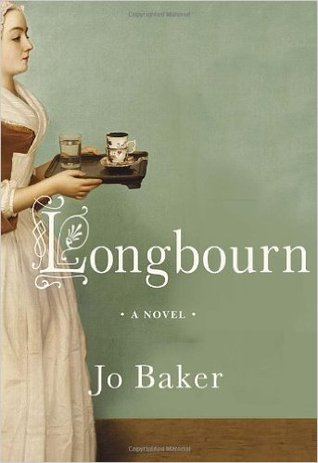
Longbourn

Rating: 3/5 stars
Author: Jo Baker
Genre: Historical Fiction/Retellings
Publisher: Knopf
Release Date: October 8th, 2013

Pages: 352

Synopsis:

If Elizabeth Bennet had the washing of her own petticoats, Sarah often thought, she’d most likely be a sight more careful with them.

In this irresistibly imagined belowstairs answer to Pride and Prejudice, the servants take center stage. Sarah, the orphaned housemaid, spends her days scrubbing the laundry, polishing the floors, and emptying the chamber pots for the Bennet household. But there is just as much romance, heartbreak, and intrigue downstairs at Longbourn as there is upstairs. When a mysterious new footman arrives, the orderly realm of the servants’ hall threatens to be completely, perhaps irrevocably, upended. 

Jo Baker dares to take us beyond the drawing rooms of Jane Austen’s classic—into the often overlooked domain of the stern housekeeper and the starry-eyed kitchen maid, into the gritty daily particulars faced by the lower classes in Regency England during the Napoleonic Wars—and, in doing so, creates a vivid, fascinating, fully realized world that is wholly her own. 

Review:

I liked where this book started, but I didn’t love where it ended.

For the most part, Baker does a very good job using the bones of a beloved classic to create her own well-thought-out novel. In the beginning, I was invested in the servants’ lives — characters we only ever glimpsed in Pride and Prejudice. However, considering how dearly people love Austen’s work, Baker was bold with some of the choices she made. If you’re a die-hard Austen purist, you may struggle with this retelling.

That said, I appreciated how the book forced me to reconsider the world Austen created — one that was charming but one-sided. The descriptions of soldier life during the Napoleonic Wars were brutal, raw, and honest, far removed from the polite dances and witty conversations Austen fans are used to.

Baker also portrays the servants’ lives with an unflinching realism, which in turn makes you question the overall “goodness” of characters like Lizzy and Jane. Some familiar figures are reimagined in ways that feel. And for all the Darcy fans out there—don’t expect too much. He appears only in passing, with perhaps half a dozen lines in the entire book.

In the end, Longbourn is an interesting read if you’re an Austen fan looking for something different, or if you enjoy historical fiction that shines a light on overlooked perspectives. But be warned: it’s not a happy tale. The later sections drag, and some of the narrative turns felt more tedious than revelatory.


Final Thoughts

Longbourn makes you think, but it won’t leave you smiling. I’d recommend it if you want a grittier, more realistic view of Regency life, but not if you’re in search of a cozy Austen-esque escape.
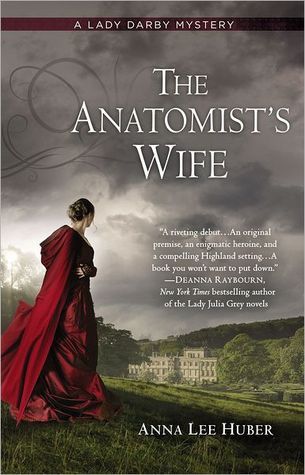
The Lady Darby Mysteries

Rating: 4-5/5 stars
Author: Anna Lee Huber
Genre: Historical Fiction/Mystery
Publisher: Berkely
Release Dates: 2012-2019

Synopsis:

Scotland, 1830. Following the death of her husband, Lady Darby has taken refuge at her sister’s estate, finding solace in her passion for painting. But when her hosts throw a house party for the cream of London society, Kiera is unable to hide from the ire of those who believe her to be as unnatural as her husband, an anatomist who used her artistic talents to suit his own macabre purposes.

Kiera wants to put her past aside, but when one of the house guests is murdered, her brother-in-law asks her to utilize her knowledge of human anatomy to aid the insufferable Sebastian Gage–a fellow guest with some experience as an inquiry agent. While Gage is clearly more competent than she first assumed, Kiera isn’t about to let her guard down as accusations and rumors swirl.

When Kiera and Gage’s search leads them to even more gruesome discoveries, a series of disturbing notes urges Lady Darby to give up the inquiry. But Kiera is determined to both protect her family and prove her innocence, even as she risks becoming the next victim… 

Review:

I love a good mystery, but I’ve never been hooked on an entire mystery series — until now. Anna Lee Huber’s Lady Darby Mysteries pulled me in from the very first book, The Anatomist’s Wife, and have kept me enthralled through every installment since.

What sets this series apart is its perfect balance of historical atmosphere, intelligent plotting, and character depth. Huber’s attention to detail brings 1830s Scotland vividly to life — from its windswept landscapes to its social customs. The research shines through without ever weighing the story down, making the setting feel immersive and authentic.

Kiera Darby herself is a remarkable heroine. Burdened by a painful past and the weight of scandal, she is intelligent, fiercely independent, and refreshingly complex. Her partnership with Sebastian Gage is one of the highlights of the series — the tension between them, both professional and romantic, gives the mysteries an added emotional pull. The slow-burn romance is especially well done, never overshadowing the central mysteries but adding depth to both characters.

The mysteries themselves are well-constructed and never formulaic. Each book offers fresh intrigue, with twists that feel both surprising and earned. Huber doesn’t shy away from gruesome or unsettling details, but they never feel gratuitous; instead, they serve to underscore the brutal realities of the time and the dangers faced by her characters.

That said, a small caveat: the titles of the books can sometimes feel a little melodramatic, but don’t let that fool you. The writing inside is far from cheesy — it’s thoughtful, layered, and gripping.


Series Order

  1. The Anatomist’s Wife (357 pages)
  2. Mortal Arts (384 pages)
  3. A Grave Matter (421 pages)
  4. A Study in Death (323 pages)
    4.5. A Pressing Engagement (83 pages)
  5. As Death Draws Near (342 pages)
  6. A Brush with Shadows (383 pages)
  7. An Artless Demise (372 pages)

Final Thoughts

If you’re a fan of historical mysteries that combine rich atmosphere, smart plots, and compelling characters, the Lady Darby series is absolutely worth picking up. It’s a perfect fit for readers who enjoy Deanna Raybourn’s Veronica Speedwell mysteries or C.S. Harris’s Sebastian St. Cyr series.

I recommend starting at the beginning with The Anatomist’s Wife, not only because the mystery is strong but also because it lays the foundation for Kiera and Gage’s dynamic — one of the series’ greatest strengths.

For me, these books were a delightful surprise: atmospheric, engrossing, and emotionally satisfying. Once I started, I couldn’t stop.

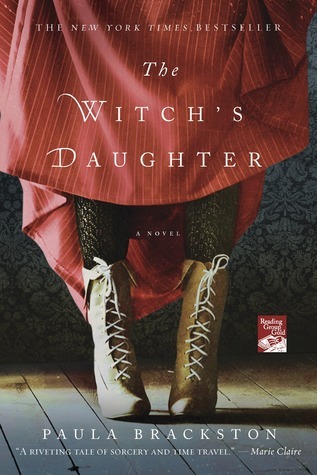
The Witch’s Daughter

Rating 3.5/5 stars
Author: Paula Brackston

Genre: Fantasy/ Historical Fiction
Publisher: St. Martin’s Griffin
Release Date: January 31, 2012

Pages: 387

Synopsis:

My name is Elizabeth Anne Hawksmith, and my age is three hundred and eighty-four years. If you will listen, I will tell you a tale of witches. A tale of magic and love and loss. A story of how simple ignorance breeds fear, and how deadly that fear can be. Let me tell you what it means to be a witch. 

In the spring of 1628, the Witchfinder of Wessex finds himself a true Witch. As Bess Hawksmith watches her mother swing from the Hanging Tree she knows that only one man can save her from the same fate: the Warlock Gideon Masters. Secluded at his cottage, Gideon instructs Bess, awakening formidable powers she didn’t know she had. She couldn’t have foreseen that even now, centuries later, he would be hunting her across time, determined to claim payment for saving her life.

In present-day England, Elizabeth has built a quiet life. She has spent the centuries in solitude, moving from place to place, surviving plagues, wars, and the heartbreak that comes with immortality. Her loneliness comes to an abrupt end when she is befriended by a teenage girl called Tegan. Against her better judgment, Elizabeth opens her heart to Tegan and begins teaching her the ways of the Hedge Witch. But will she be able to stand against Gideon—who will stop at nothing to reclaim her soul—in order to protect the girl who has become the daughter she never had?

Review:

Paula Brackston’s The Witch’s Daughter is an atmospheric blend of fantasy and historical fiction, weaving witchcraft, folklore, and centuries of survival into a story that feels both timeless and tragic.

The strongest part of the novel is its historical settings. Brackston brings Elizabeth’s past vividly to life — from plague-ridden villages to shadowy witch trials — with enough sensory detail to make each era feel tangible. These sections are rich, immersive, and full of emotional weight. They reveal not only Elizabeth’s resilience but also the fear and superstition that made survival nearly impossible for women accused of witchcraft.

By contrast, the present-day storyline feels less compelling. While Elizabeth’s relationship with Tegan has promise and offers a tender glimpse into her longing for connection, the modern chapters sometimes lack the depth and richness of the historical ones. Toward the end, the pacing begins to rush, as if the novel is sprinting toward resolution rather than letting the conclusion unfold naturally. This unevenness makes the finale feel less satisfying compared to the careful buildup earlier in the book.

Brackston’s prose is lyrical and detailed, perfectly suited to gothic historical fiction. She captures both beauty and brutality, lingering on the textures of Elizabeth’s world in a way that makes even mundane details shimmer with atmosphere. Yet at times, the story sacrifices narrative cohesion for mood, leaving some plot threads feeling unresolved or too quickly tied up.


Final Thoughts

The Witch’s Daughter is a book best suited for readers who love historical fantasy with a gothic edge — those who don’t mind slow immersion, lush descriptions, and morally ambiguous characters. If you’re drawn to tales of witches, curses, and survival across centuries, this novel will likely sweep you up, especially in its historical passages.

For me, the imbalance between the past and present storylines kept this from being a full four-star read, but it was still an engaging, atmospheric experience. Brackston’s gift for historical detail is undeniable, and I would happily pick up more of her work when I’m in the mood for something darkly magical.

Design a site like this with WordPress.com
Get started