Books that Feel like Therapy

Today, I want to talk about something that has become deeply personal in my life: mental health representation in books.

There’s something I’ve come to learn about life: it’s wonderful and full of bright moments, but it can also be messy, unpredictable, and, frankly, hard. And no matter how much we try to plan or prepare, there will always be curveballs we can’t dodge. I used to think the goal was to create a perfect life — one where I had everything figured out. But therapy (and books — always books) taught me that perfection was never the goal. Instead, it’s about perspective, acceptance, and finding the little sparks of joy even when things feel heavy.

In these past few years, alongside cozy stories and magical escapes, I found myself reaching for books that didn’t shy away from the messy, complicated parts of being human. Like many others, I’ve wrestled with my own mental health. And what I learned—through therapy, through trial and error, through good days and bad ones— is this: life can be wonderful, but it’s never perfect. No matter how much we plan, something will always find a way to derail us. That doesn’t mean we’ve failed—it just means we’re human.

For me, reading books that spoke honestly about anxiety, depression, self-doubt, and resilience was a kind of quiet therapy of its own. They reminded me that I wasn’t alone, that struggle doesn’t cancel out joy, and that perspective can be just as powerful as progress. These books became companions in my growth, nudging me toward a healthier, more grounded version of myself.

Here are some of the books that helped me shift my perspective and accept life for what it is—beautiful, imperfect, and sometimes incredibly hard:

Wintering by Katherine May – A tender, lyrical reflection on seasons of rest and retreat, teaching me that slowing down isn’t weakness but wisdom.

Broken (In the Best Way Possible) by Jenny Lawson – Raw, hilarious, and heartbreaking all at once. Jenny Lawson’s honesty about living with mental illness made me feel seen. This book helped me through one of the darkest times in my life.

Everything is OK by Debbie Tung – A beautifully illustrated memoir that captures the weight of anxiety and the slow, hopeful path toward healing.

Me vs. Brain: An Overthinker’s Guide to Life by Hayley Morris – Lighthearted yet painfully relatable, this book gave me permission to laugh at the spirals my brain creates.

Everyone But Myself by Julie Chavez – A thoughtful memoir about identity, burnout, and learning how to find yourself again when you feel lost.

Anxious People by Fredrik Backman – Quirky and tender, this story captures the absurdity of being human—and how anxiety quietly threads through so many lives.

Hello Stranger by Katherine Center – A love story, yes, but also a gentle exploration of resilience and self-compassion when life doesn’t go to plan. I particularly enjoyed the therapy that the main character experiences, as I felt that it was a healthy and accurate representation of what good therapy looks like.

The Wedding People by Alison Espach – Funny and poignant, with characters stumbling through life’s chaos in ways that felt familiar and grounding. (*Trigger warnings for attempted suicide)

Each of these reads reminded me in its own way that life doesn’t have to be perfect to be worth living. We’re allowed to be messy. We’re allowed to be in progress. And sometimes, the best thing we can do is simply meet ourselves where we are, instead of where we think we “should” be.

If you’ve ever found comfort in a book that understood your inner world better than you could put into words, you know what I mean. These are the kinds of books I’ll carry with me, the ones that remind me that healing isn’t linear—and that none of us are alone in the struggle.
Quick Bites: Small Books with Big Impact

Welcome back! Previously, I shared a post on cozy reads. Today, I’m turning to something a little different: quick bite books.

Quick Bites are the short ones — slim novels, novellas, essays, short stories, and poetry collections that you can tuck into a busy afternoon. They may be brief, but their impact is anything but small. These are the books I’ve reached for when I didn’t think I had time to read at all — and found myself not just reading, but deeply moved. Each one has been like a breath of fresh air, clearing my mind and settling my spirit.

Here are a few of my favorites:

A Bit Much by Lyndsay Rush – A witty, honest, and wonderfully relatable poetry collection that feels like sharing coffee with a friend who “gets it.” It’s funny, heartfelt, and surprisingly grounding. This was in my top ten reads of 2024.

Instructions for Traveling West by Joy Sullivan – A poetry collection that feels like both a map and a companion. Sullivan’s words invite you to look outward at the wide world while also turning inward with tenderness.

Ordinary Time: Lessons Learned While Staying Put by Annie B. Jones – Gentle reflections on finding sacredness in the everyday. Jones makes stillness feel not only possible but holy.

Bite by Bite: Nourishments and Jamborees by Aimee Nezhukumatathil – A vibrant, joyful exploration of food and memory from one of my own college professors! Reading this felt like a celebration of flavor, culture, and connection.

Sandwich by Catherine Newman – This novella is warm, messy, and full of heart. It feels like summer sun on your shoulders, with all the sweetness and ache of life tucked inside. And it turns out that she has a sequel coming out this fall!

In Conclusion, Don’t Worry About It by Lauren Graham – Brief but full of wisdom, like a pep talk from your big sister. Graham’s voice is light, funny, and exactly the kind of encouragement you want to keep on your nightstand.

The Serviceberry by Robin Wall Kimmerer – A stunning essay that weaves together ecology, gratitude, and reciprocity. It’s a meditation on living generously, and like all of Kimmerer’s work, it stays with you.

Fall Risk by Abby Jimenez – A tender, emotional short story that proves even the briefest reads can leave a lasting mark. Jimenez’s signature humor and heart shine here, making it one you’ll think about long after the last page.


Sometimes a little goes a long way. These books prove that you don’t need hundreds of pages to be changed, comforted, or inspired. If you’ve ever thought, “I want to read, but I just don’t have time,” one of these little gems might be exactly what you need.

Author Spotligh: CJ Archer

About two years ago, I stumbled across a book that completely drew me in: The Librarian of Crooked Lane by CJ Archer. I believe I first discovered it due to a Kindle Unlimited recommendation. The premise caught me right away: A librarian with a mysterious past, a war hero with a secret, and the heist of a magic painting. All set in London during the 1920s, but with a magical twist? Count me in.

In Archer’s world, people are born either as magicians—each with their own unique affinity, whether that’s paper, silver, ink, etc.—or as non-magicians. Those affinities allow them to enhance the properties of everyday man-made goods. It was such a clever, fascinating idea that I couldn’t resist downloading it… and within a few chapters, I was hooked.

I tore through the remaining Glass Library books that were available at the time. And when I ran out? I quickly discovered that CJ Archer has a very extensive backlog. From there, I dove straight into her After the Rift series (a sweeping fantasy with a healthy dose of romance) and A Secret Life, the first book from her Shakespearean romance series. After the Rift has now become one of my all-time favorites, and I was pleasantly surprised by her historical romance, A Secret Life, which was much steamier than anything I had read from her so far.

Since then, I’ve completed the Glass Library and After the Rift series, started her eleven-book (and counting!) Cleopatra Fox Historical Mystery series, and I have downloaded at least one book from each one of her multiple series, because I have every intention of making my way through her entire backlist.

From supernatural adventures to fantasy epics, from historical mysteries to romance/romantasy, CJ Archer truly writes something for just about every type of reader. Even her romances range from sweet to spicy (both are always swoon-worthy), showing just how versatile she can be with her writing.

What I especially love in her writing is that Archer has a gift for atmosphere and characters you just want to keep coming back to. Whether it’s a smoky London street, a tucked-away magical library, or a far-off land, you feel transported. Her stories also balance whimsy with deeper themes—grief, belonging, and finding strength in unexpected places.

Next up on my list is her Glass and Steele series, the prequel to Glass Library. I can’t wait to remeet some of my favorite characters from the Glass Library series as their younger selves! I’m also eagerly awaiting the upcoming spin-off that follows a side character from After the Rift.

Finding CJ Archer’s books has been such a joy for me as a reader. Her stories are exactly what I love—rich in atmosphere, brimming with magic, mystery, romance—and always impossible to put down.

If you’re curious where to begin, I think you should start with the series that sounds the most appealing to you. But fair warning: once you step into Archer’s worlds, you may not want to leave.

Where to Start with CJ Archer

  • Historical Fantasy with Magic & MysteryThe Glass and Steel Series and the Glass Library series
  • Fantasy + Romance (Romantasy)After the Rift (my personal favorite so far)
  • Cozy Historical MysteryCleopatra Fox Mysteries (light, clever, and fun)
  • Victorian Historical Paranormal/Fantasy RomanceThe Freak House Series, The Ministry of Curiosities, or Emily Chambers Spirit Medium Trilogy
  • Steamy Historical RomanceA Secret Life (Lord Hawkesbury Players series) or The Assassins Guild
  • Historical Fantasy + SpiceThe Witchblade Chronicles

When the World Feels Heavy: Cozy Reads for Tired Hearts

There are certain seasons in life when the world feels just a little too heavy. (And isn’t that true now more than ever?) In moments like these, I’ve found myself reaching for books that feel like a warm hug. Not necessarily to escape reality, but to find a place to rest my weary heart.

I noticed this shift in my reading self around 2022. After we had finally, truly begun to emerge from the shadow of the pandemic, my body began to let go of the constant hum of fight-or-flight mode I’d been carrying. And with that release came a quiet realization: I didn’t have as much energy for heavy, hard stories.

That was the year Travis Baldree’s Legends & Lattes made its appearance, and I, subsequently, fell headfirst into cozy fantasy. Low stakes. Ordinary living. Characters who were simply searching for happiness, community, and growth. Since then, coziness has become a guiding theme in my reading — a gentle reminder that not every story has to be about saving the world.

I used to think I wanted to be like the brave heroines in stories. Someone who could overcome any challenge thrown her way and take on any adversary. But somewhere along the way, I realized that what I really wanted was something much simpler: a quiet and cozy home, an endless pot of tea, a room lined with books, and a few loved ones to share it all with. I basically had the reverse experience of Bilbo Baggins: I craved a hobbit hole rather than finding adventure. And I’ve found that the characters who are also chasing that kind of life — one built on warmth, small joys, and belonging — are the ones I end up appreciating the most.

So, in honor of that shift, I thought it only fitting that my first post back be a celebration of cozy reads. The stories that offer comfort, joy, and a reminder that sometimes, the gentlest tales are the ones we need most.

Legends & Lattes by Travis Baldree

The one that started it all for me. Viv, a retired orc barbarian, decides she’s done with adventuring and instead opens a coffee shop. That’s it. No epic battles, no looming doom — just pastries, friendship, and slow mornings. It’s warm, sweet, and quietly hopeful.

The House in the Cerulean Sea by TJ Klune

This one feels like a hug in story form. Linus, a caseworker, is sent to evaluate a magical orphanage where six extraordinary children live — including one who may or may not be the Antichrist. What could be dark is instead luminous with kindness and found family.

The Very Secret Society of Irregular Witches by Sangu Mandanna

Mika, a lonely witch, finds herself drawn into an eccentric household full of magic, children, and unexpected love. Cozy fantasy meets cottagecore romance in the sweetest way.

Anne of Green Gables by L. M. Montgomery

Sometimes coziness is found in old friends. Anne’s big imagination, her stubborn streak, and her delight in the everyday always remind me to pause and savor the beauty of the world. I even ended up naming my dog after spunky, courageous Anne.

The Spellshop by Sarah Beth Durst

One of the newer cozy fantasies on my list, this story follows a woman who opens a magical bookshop after her old life falls apart. It has gentle magic, a touch of whimsy, and all the comfort of wandering through shelves of books with no hurry at all.

Emily Wilde’s Encyclopedia of Faeries by Heather Fawcett

This one is for those who like their coziness with a dash of folklore. Emily is a prickly scholar who prefers books to people, and her research into faeries brings her into all sorts of enchanting (and slightly chaotic) situations. It’s charming, funny, and a little bit like sitting fireside with an old fairy tale.

Howl’s Moving Castle by Diana Wynne Jones

The ultimate comfort classic. Sophie, cursed into the body of an old woman, barges her way into the moving castle of the dramatic wizard Howl — and what follows is funny, whimsical, and unexpectedly romantic. If you love the Studio Ghibli film, the book has even more magic to sink into.

The Teller of Small Fortunes by Julie Leong

A quiet, beautiful little gem. It follows a wandering fortune teller who sees the futures of others but struggles to find her own place in the world. The storytelling is gentle, lyrical, and brimming with small, intimate moments that linger long after you’ve finished.


Closing Thoughts

If there’s one thing I’ve learned over the years, it’s that reading doesn’t have to be about the biggest, most ambitious book on your shelf. Sometimes it’s about the gentlest one. The story that reminds you to breathe, to notice, to rest.

So here’s to new beginnings on this blog, and to many more cozy reading moods to share with you. If you’ve read (or want to read) any of these, I’d love to hear which ones bring you comfort, too.

And until then, here’s to tea, to blankets, and to books that feel like home.

Hello Again, Friends

It’s been a while, hasn’t it? The last time I opened this little corner of the internet was back in 2019, which feels like a lifetime ago. In these past few years, so much has shifted — not only in the world but also in my own reading life. My tastes haven’t completely changed, but they’ve certainly evolved. Books I once reached for without a second thought don’t always hold the same appeal, and new genres and themes have quietly worked their way onto my shelves (and my heart). Some of the beliefs I once held about reading have changed or been discarded altogether. I’m entering a kinder, more thoughtful period of my life, and that has indeed become true in my reading tastes and habits.

During this hiatus, I’ve missed having a space to talk about stories — not just reviewing them, but connecting them to the moods and moments of life. That’s something I’d love to lean into as I give this blog a fresh chance: rather than focusing only on single reviews all the time, I want to create posts that feel like a cozy guide to books for different reading moods.

Because sometimes, you don’t want “the best” book. You want the right book — the one that meets you where you are. Maybe you’re craving something atmospheric and gothic for a rainy day, or something light and romantic to curl up with on a quiet weekend. Perhaps you want a book that leaves you thinking long after you’ve turned the last page, or one that simply makes you smile.

So that’s the new direction here: a blog that’s less about ticking boxes and more about finding the books that match the mood. Think of it as a little reading nook we can share — cozy, low-pressure, and full of bookish conversation.

I’m so glad you’re here (whether you’re returning after all this time or finding this blog for the first time). I can’t wait to see where our reading moods take us.

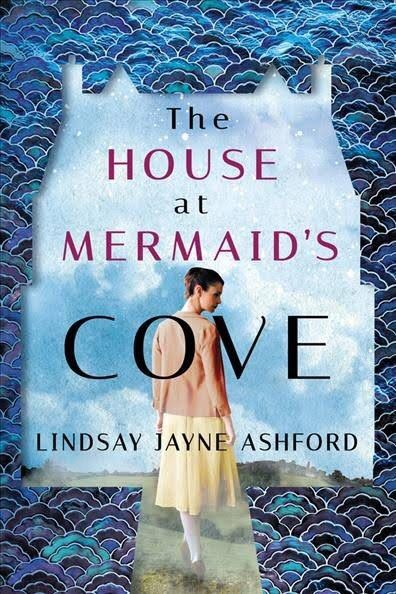
The House at Mermaid’s Cove

  1. Rating: 4/5 stars
  2. Genre: Historical Fiction
  3. Publisher: Lake Union Publishing
  4. Release Date: August 11, 2020
  5. Pages: 286

Synopsis :

As World War II rages, love, mystery, and secrets collide on the English coast in a riveting novel by the bestselling author of The Snow Gypsy.

In April 1943 a young woman washes ashore on a deserted beach in Cornwall, England. With shorn hair and a number stitched on her tattered chemise, Alice is the survivor of a ship torpedoed by a German U-boat. She’s found by the mysterious Viscount Jack Trewella, who suspects that she’s a prisoner of war or a spy. But the secret Alice asks Jack to keep is one he could never have guessed, and it creates an intimate bond he never expected.

With her true identity hidden beneath the waves, Alice grasps the chance to reinvent herself. But as she begins to fall for Jack, she discovers he has secrets too – ones echoing the legend of a mermaid said to lure men into the dark depths of the sea.

For two strangers in the shadow of war, lost love, and haunting memories, is it time to let go of the past? Or to finally face it – whatever the risks? 

Review:

I received a copy of this book from NetGalley in exchange for an honest review.

I’ll be honest right up front—this one sits somewhere between a 3.5 and 4-star read for me. On a technical level, the writing wasn’t always as smooth as it could have been. The pacing lagged here and there, and I found myself wishing the characters had been fleshed out a little more. Some plot transitions felt a bit bumpy too.

But here’s the thing: I still really enjoyed reading it. Sometimes a book doesn’t have to be flawless to be a good companion, and that’s exactly what The House at Mermaid’s Cove was for me.

This is definitely on the lighter side of WWII fiction. Don’t expect the same level of intensity or gut-punch storytelling that some historical novels deliver. Instead, it feels like a gentler, almost “fluffier” take—still dealing with war, loss, and survival, but with softer edges. And honestly? That’s not a bad thing. Sometimes we need a story that isn’t relentlessly heavy.

Alice’s backstory as a nun-turned-survivor is what drew me in most. It’s such a unique perspective, and I liked the way the author wove her faith into the story without making it feel preachy. Alice’s belief system gave her depth, but it never overshadowed the narrative.

The romance and mystery elements were fun to follow, too—adding layers that made it more than just “another WWII story.” And while I do wish I could have spent more time with the side characters (some of them felt more like sketches than portraits), I found myself turning the pages quickly, eager to see what happened next.

Final Thoughts

At the end of the day, if you’re a fan of historical fiction but want something on the lighter, more escapist side, this is a great pick. It’s a quick, cozy, atmospheric read with just enough romance and mystery to keep you hooked. Perfect for when you want a WWII novel that won’t completely weigh down your heart.

Trigger warning: There are brief mentions of sexual assault/rape. It’s not graphically described, but it is present, so keep that in mind going in.

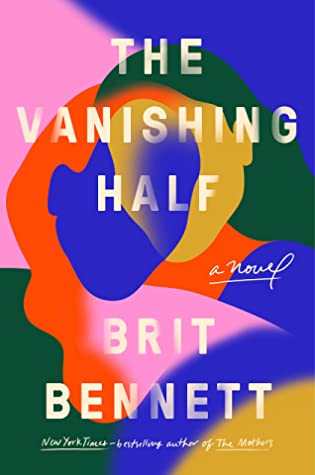
The Vanishing Half

  • Rating: 5/5 stars
  • Genre: Historical Fiction/Literary Fiction/Women’s Fiction
  • Publisher: Riverhead Books
  • Release Date: June 2, 2020
  • Pages: 352

Synopsis :

The Vignes twin sisters will always be identical. But after growing up together in a small, southern black community and running away at age sixteen, it’s not just the shape of their daily lives that is different as adults; it’s everything: their families, their communities, their racial identities. Ten years later, one sister lives with her black daughter in the same southern town she once tried to escape. The other secretly passes for white, and her white husband knows nothing of her past. Still, even separated by so many miles and just as many lies, the fates of the twins remain intertwined. What will happen to the next generation when their own daughters’ storylines intersect?

Weaving together multiple strands and generations of this family, from the Deep South to California, from the 1950s to the 1990s, Brit Bennett produces a story that is at once a riveting, emotional family story and a brilliant exploration of the American history of passingLooking well beyond issues of race, The Vanishing Half considers the lasting influence of the past as it shapes a person’s decisions, desires, and expectations, and explores some of the multiple reasons and realms in which people sometimes feel pulled to live as something other than their origins.

As with her New York Times-bestselling debut The Mothers, Brit Bennett offers an engrossing page-turner about family and relationships that is immersive and provocative, compassionate and wise.

Review:

You know those rare books that just get under your skin and stay with you long after you’ve closed the last page? The Vanishing Half was absolutely one of those for me.

Brit Bennett has such a gift for storytelling—it felt like she was weaving this gorgeous, multicolored quilt out of all the different lives and timelines. I was never lost in the plot, even as the story moved from past and present or from one character to another. Instead, I felt like I was being gently carried along, watching how the choices of one generation spilled over into the lives of the next.

At its core, this book is about identity. Who we are, who we want to be, and sometimes who we pretend to be. The twin sisters, Desiree and Stella, couldn’t have taken more different paths, and yet both of them are so human, so heartbreakingly real. One embraces her roots even when they feel heavy, while the other builds an entirely new life by walking away from hers.

The characters are what made this book unforgettable for me. They’re messy, flawed, sometimes frustrating, but always real. I found myself rooting for them, even when they made choices I didn’t agree with.

What surprised me most was how much the book is also about family—how secrets ripple through generations and how silence can sometimes weigh heavier than words. The daughters of the twins are just as captivating as their mothers, and seeing how history echoes forward was both fascinating and heartbreaking.

And can we talk about the writing itself? Bennett’s prose is so smooth and lyrical, but never in a way that feels heavy or pretentious. It’s the kind of writing that makes you want to keep reading “just one more chapter,” even when you should definitely be sleeping.

Final Thoughts

Honestly, this book is everything: it’s endearing, it’s heartbreaking, it’s thought-provoking, and it’s one I know I’ll be recommending for a long time. There’s been a lot of buzz about The Vanishing Half, but let me tell you—it’s 100% worth it.

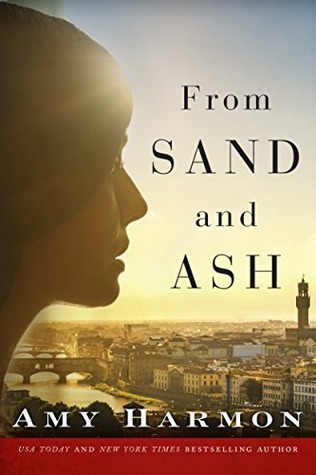
From Sand and Ash

Rating: 5/5 stars

Genre: Historical Fiction

Publisher: Lake Union Publishing

Release Date: December 1, 2016

Pages: 384

Synopsis :

Italy, 1943 — Germany occupies much of the country, placing the Jewish population in grave danger during World War II.

As children, Eva Rosselli and Angelo Bianco were raised like family but divided by circumstance and religion. As the years go by, the two find themselves falling in love. But the church calls to Angelo and, despite his deep feelings for Eva, he chooses the priesthood. Now, more than a decade later, Angelo is a Catholic priest and Eva is a woman with nowhere to turn.

With the Gestapo closing in, Angelo hides Eva within the walls of a convent, where Eva discovers she is just one of many Jews being sheltered by the Catholic Church. But Eva can’t quietly hide, waiting for deliverance, while Angelo risks everything to keep her safe.

With the world at war and so many in need, Angelo and Eva face trial after trial, choice after agonizing choice, until fate and fortune finally collide, leaving them with the most difficult decision of all.

Review:

I can’t believe I had never heard of Amy Harmon until recently! She first caught my attention on Bookstagram when someone posted about one of her other books. Curious, I looked her up and discovered she had an impressive backlist. That’s when I found From Sand and Ash.

I will admit that it was actually one of Harmon’s other books that initially piqued my interest more. However, From Sand and Ash became available on Kindle Unlimited with a free audiobook download. I needed a new audiobook at the time, so I thought, “Why not?” Little did I know what I had signed up for.

It didn’t take long for me to become completely captivated by the characters and their story. This book is achingly beautiful. I felt spellbound the entire time I was reading and listening. I found myself taking long walks just to hear what happened next. Before even reaching the halfway point, I knew this was going to be a new favorite.

Harmon’s approach to writing a WWII novel set in Italy was especially compelling. I’ve never read a WWII novel set in Italy. Of course, I knew from history classes about Italy’s involvement, but I’d never seen it up close. It was eye-opening to realize that most Italians didn’t want to be involved in a war they felt no part of, yet were forced into it under a fascist state.

That doesn’t mean Italians were necessarily sympathetic to Jews, but it reshaped my understanding. I had also never thought much about Jewish Italians during this period, typically focusing on other parts of Europe when considering the atrocities of WWII. Harmon’s portrayal of Eva and her family offered a new perspective that broadened my understanding of history—an aspect of the book I deeply appreciated.

Unexpectedly, this novel also presented one of the most beautiful love stories I’ve ever encountered. I’m a sucker for romance in any genre. Eva and Angelo’s love grows alongside their lives, often leaving me on the verge of tears. Harmon balances their relationship perfectly—it is ever-present but not always the central focus. Through their story, she shows what a powerful, enduring love looks like, capable of withstanding some of life’s most harrowing moments.

Final Thoughts

As I mentioned earlier, Amy Harmon has an extensive backlist encompassing various genres. After reading From Sand and Ash, I have mentally put all of her books on my TBR. One that I am really looking forward to is her newest release, Where the Lost Wander. I also can’t wait to try some of her fantasies!

The Grace Year

  • Rating: 3/5 stars
  • Genre: YA Dystopian
  • Publisher: Wednesday Books
  • Release Date: October 8, 2019
  • Pages: 416

Synopsis :

No one speaks of the grace year. It’s forbidden.

In Garner County, girls are told they have the power to lure grown men from their beds, to drive women mad with jealousy. They believe their very skin emits a powerful aphrodisiac, the potent essence of youth, of a girl on the edge of womanhood. That’s why they’re banished for their sixteenth year, to release their magic into the wild so they can return purified and ready for marriage. But not all of them will make it home alive.

Sixteen-year-old Tierney James dreams of a better life—a society that doesn’t pit friend against friend or woman against woman, but as her own grace year draws near, she quickly realizes that it’s not just the brutal elements they must fear. It’s not even the poachers in the woods, men who are waiting for a chance to grab one of the girls in order to make a fortune on the black market. Their greatest threat may very well be each other.

With sharp prose and gritty realism, The Grace Year examines the complex and sometimes twisted relationships between girls, the women they eventually become, and the difficult decisions they make in between.

Review:

I picked up The Grace Year after seeing so many positive reviews online from multiple sources. It had been a while since I’d read a dystopian novel. Like many others, I used to devour them, but over time, I grew tired of the same tropes being recycled in YA dystopian fiction.

When I came across The Grace Year, it seemed a bit refreshing. It didn’t follow the exact plot line that has dominated YA dystopia for the past fifteen years. I appreciated that it appeared inspired by the #MeToo movement and had a feel reminiscent of The Handmaid’s Tale.

The main character, Tierney, is a young woman who sees through the misogyny of her community but lacks the power to make a change. Her “Grace Year” is approaching, and her only hope is to return as a worker to avoid being trapped in a marriage subject to her husband’s will.

But, as often happens with heroines, her plans are upended by a shocking event. As she enters her grace year alongside the other girls from her community, reality and sanity begin to twist. Trust erodes, and survival becomes the only thing that matters.

The Grace Year felt like a mix of The Handmaid’s Tale, The Hunger Games, The Crucible, and a female version of Lord of the Flies. It explores critical themes, such as the dangers of mob mentality and how society can consume and destroy itself. I liked how certain story elements become clear as the plot progresses, justifying the anger and complete insanity of this world.

However, I couldn’t say I loved it. The timing and pacing felt off, making it hard to gauge how much time had passed. Some characters, including Tierney, occasionally fell flat. Perhaps the most disappointing part for me was the ending. I can’t go into specifics without spoiling it, but I was left feeling indifferent and unsatisfied. I believe there was potential for a more impactful conclusion that the book never quite delivered.

Final Thoughts

I didn’t hate it, but I couldn’t love it either. On the emotional scale, it landed firmly in the “meh” category for me.

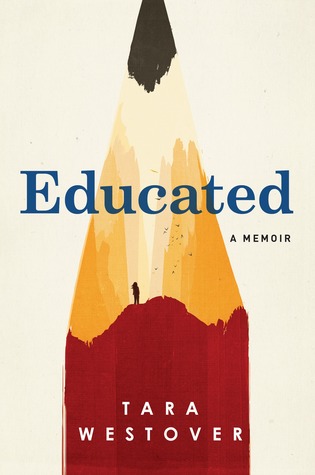
Educated

  • Rating: 5/5 stars
  • Genre: Memoir
  • Publisher: Random House
  • Release Date: February 20, 2018
  • Pages: 334

Synopsis:

Tara Westover was 17 the first time she set foot in a classroom. Born to survivalists in the mountains of Idaho, she prepared for the end of the world by stockpiling home-canned peaches and sleeping with her “head-for-the-hills bag”. In the summer she stewed herbs for her mother, a midwife and healer, and in the winter she salvaged in her father’s junkyard.

Her father forbade hospitals, so Tara never saw a doctor or nurse. Gashes and concussions, even burns from explosions, were all treated at home with herbalism. The family was so isolated from mainstream society that there was no one to ensure the children received an education and no one to intervene when one of Tara’s older brothers became violent.

Then, lacking any formal education, Tara began to educate herself. She taught herself enough mathematics and grammar to be admitted to Brigham Young University, where she studied history, learning for the first time about important world events like the Holocaust and the civil rights movement. Her quest for knowledge transformed her, taking her over oceans and across continents, to Harvard and to Cambridge. Only then would she wonder if she’d traveled too far, if there was still a way home.

Educated is an account of the struggle for self-invention. It is a tale of fierce family loyalty and of the grief that comes with severing the closest of ties. With the acute insight that distinguishes all great writers, Westover has crafted a universal coming-of-age story that gets to the heart of what an education is and what it offers: the perspective to see one’s life through new eyes and the will to change it.

Review:

I honestly don’t know where to begin. Several years ago, I read The Glass Castle and was astounded by Walls’ family dysfunction. I had yet to meet the Westovers.

Reading about Tara Westover’s life felt almost miraculous. Abuse of every kind permeated her childhood, yet she survived — and not just survived, but became Dr. Tara Westover. That alone is nothing short of extraordinary.

Westover has a remarkable gift for storytelling. She grapples with memory in a way that feels honest and human, admitting that it can be unreliable or shaped by our own desires. Her narrative doesn’t just tell a story — it offers a small study of the mind itself.

Most importantly, this is a story of survival. At times, it seemed impossible that Tara would emerge intact, and yet she did. I had to constantly remind myself that this was nonfiction — that her experiences actually happened to her.

Final Thoughts

I was completely absorbed. I found myself holding my breath, flinching at moments, and even wanting to shout at her to see sense! I can’t remember the last book — nonfiction or otherwise — that made me feel this way.

If you are looking for an incredible, moving read that will make you grateful for all you have, Educated is an absolute must.

Design a site like this with WordPress.com
Get started