Book Review: Wreck

Rating: 4.5 ⭐️

Author: Catherine Newman

Genre: Contemporary/Literary Fiction

Pages: 224 pages

Synopsis

Wreck returns readers to the beloved family from Sandwich—but this time, we’re back home with them as life throws a fresh handful of joys, worries, and emotional knots their way. With Catherine Newman’s signature blend of humor, tenderness, and hard-won wisdom, this companion novel explores what it means to love your people fiercely while navigating the everyday wreckage of being human. It’s honest, warm, and deeply relatable in all the best ways.


Review

First Impressions

Last year, I read Sandwich and absolutely fell in love with Rocky and her family. But also with Catherine Newman’s writing. Her voice has this rare combination of heartache and hilarity that just feels like real life rendered beautifully.

So when I saw that Newman had a new book coming out in Fall 2025—and that it was a companion novel to Sandwich—I didn’t even hesitate. I knew I was going to read it the second I could get my hands on it.

Wreck did not let me down. If anything, it made me love this family even more.


Strengths

Writing Style
Newman’s prose is warm, witty, and full of emotional truth. She writes with a kind of gentle insight that feels like someone squeezing your hand and saying, “I get it. Life is hard, but look—we’re still here.”

Characters
Seeing the family again was a joy, but this time I got to sit with them in a slightly deeper, more vulnerable way. Their anxieties are sharper and more present, stretching across a wider span of time. It feels real. Raw in moments, tender in others, and always deeply human.

I loved Sandwich, but Wreck carries a little more emotional weight, and I adored that. It mirrors the way life sometimes feels: messy, stressful, funny, heartbreaking, and hopeful all at once.

Themes
This is a novel about the wreckage of modern life—anxiety, fear, aging parents, caregiving, uncertainty—and how we love each other through it. Newman has a gift for acknowledging the ache of being alive while also providing genuine comfort.


Weaknesses / Caveats

The emotional intensity may feel heavier than Sandwich for some readers. The characters sit with their anxieties for a long time, which is part of what made the book resonate with me; however, it might feel overwhelming if you’re not in the right headspace for a close-up look at the interior worries of family life. You may even want to check out some trigger warnings before diving in.

Still, even in the heavier moments, Newman never loses her warmth or humor.


Final Thoughts

I truly loved this book. It felt relatable in ways that surprised me. Almost as if some of the characters’ anxieties were echoing my own from this past year. Newman balances pain and gentleness so beautifully that reading Wreck felt like being wrapped in a cozy blanket someone made just for me.

📚 Perfect for readers who enjoy:

  • Thoughtful, character-driven domestic fiction
  • Stories about family, aging, and the emotional work of everyday life
  • Books that blend humor with heartfelt insight
  • Authors like Ann Patchett, Katherine Heiny, and Elizabeth Strout

For me, this was a heartfelt and deeply comforting experience, and I’d recommend it to readers who want a tender, honest, and emotionally rich family story that stays with you long after the final page.

Book Review: Bog Queen

Rating: 4 ⭐️

Author: Anna North

Genre: Historical/Literary Fiction

Pages: 264 pages

Synopsis:

Bog Queen follows two women—Agnes, a modern archaeologist haunted by her own insecurities, and the ancient woman whose preserved body she uncovers from the peat bog. As their stories intertwine across centuries, Anna North explores what’s gained and lost in the name of progress, how women’s lives are preserved (or erased) by history, and what remains buried beneath both land and memory.


Review

What first drew me in was the premise—a story about a bog body, a mystery across time, and the promise of lush, atmospheric writing. I went in expecting something introspective and literary, and that’s precisely what I got. The dual timelines and shifting perspectives created a sense of layering, like slowly excavating not just the bog, but the characters themselves.

Strengths

Writing Style: North’s prose is rich and atmospheric. Every page is saturated with mood and tension, and she balances the poetic with the precise in a way that feels deliberate and haunting. It’s the kind of writing that makes you pause just to reread a sentence.

Structure & POV: The multiple perspectives are handled beautifully. Each voice added another layer to the story, and by the end, the two threads finally knot into one. It’s subtle, but so satisfying.

Themes: The novel’s exploration of human progress—particularly at the expense of the environment and tradition—feels timely and deeply resonant. North raises questions about preservation, exploitation, and the cyclical nature of destruction, all while maintaining an undercurrent of a quiet mystery. It asks: what do we sacrifice when we dig too deep, or move too fast?

Atmosphere: You can almost feel the damp chill of the bog and the weight of centuries pressing in. It’s cold, wet, ancient, and absolutely dripping with mood. I found it to be so incredibly immersive.

Weaknesses / Caveats

The one negative of the book, the reason this isn’t a five-star read for me, is that Agnes’s introspection sometimes went a little too far. I understood why her awkwardness and self-doubt were emphasized, but it occasionally pulled focus from the bigger themes and slowed the story’s rhythm. There were moments when I wanted the story to get out of her head and back to the issue at hand. Ultimately, this isn’t a character-driven book, and therefore, focusing so much on how Agnes struggles with people didn’t really interest me. When it came to her inability to handle the rising conflict in the current day, I think the fact that she was there to do her job and her inexperience with handling conflict at all would have been sufficient.


Final Thoughts

Bog Queen is a thought-provoking, quietly powerful novel—academic in tone but compulsively readable. It lingers long after the last page and gives readers so much to think about.

📚 Perfect for readers who enjoy:

  • Dual timelines and multi-POV storytelling
  • Climate and environmental fiction
  • Thoughtful, atmospheric historical mysteries
  • Anthropological or academic tones in fiction

For me, this was haunting and evocative, and I’d recommend it to readers who love slow, layered stories that unearth both history and humanity.

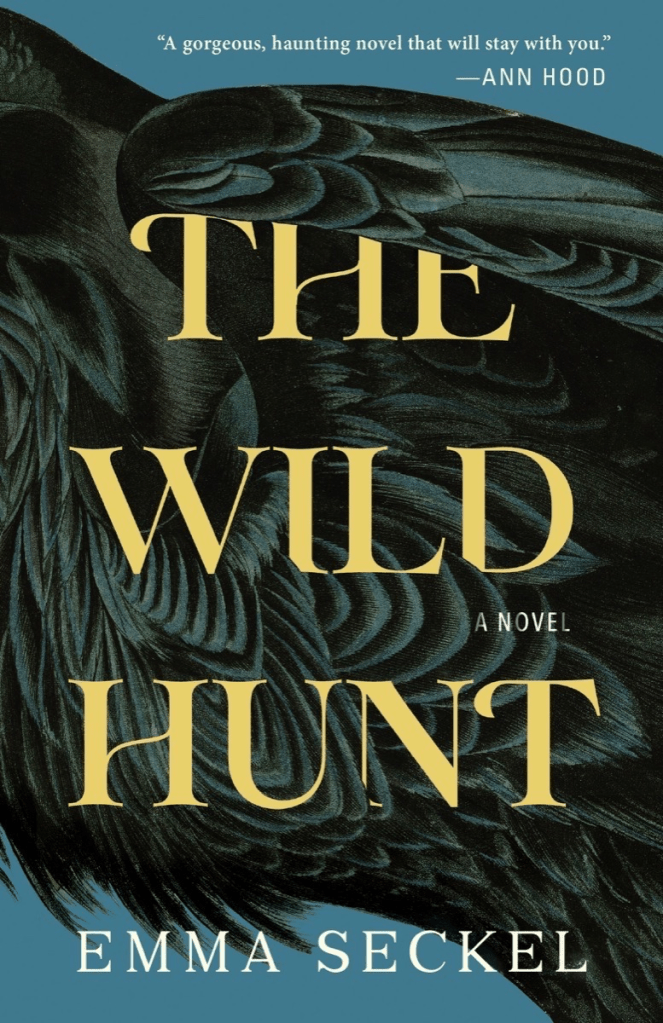
Book Review: The Wild Hunt


Rating: 3.5 ⭐️

Author: Emma Seckel

Genre: Historical Supernatural Horror

Pages: 351 pages

Synopsis:

The islanders have only three rules: don’t stick your nose where it’s not wanted, don’t mention the war, and never let your guard down during October. 

Leigh Welles has not set foot on the island in years, but when she finds herself called home from a disappointing life on the Scottish mainland by her father’s unexpected death, she is determined to forget the sorrows of the past—her mother’s abandonment, her brother’s icy distance, the unspeakable tragedy of World War II—and start fresh. Fellow islander Iain MacTavish, a RAF veteran with his eyes on the sky and his head in the past is also in desperate need of a new beginning. A young widower, Iain struggles to return to the normal life he knew before the war.  

But this October is anything but normal. This October, the sluagh are restless. The ominous, bird-like creatures of Celtic legend—whispered to carry the souls of the dead—have haunted the islanders for decades, but in the war’s wake, there are more wandering souls and more slaugh. When a local boy disappears, Leigh and Iain are thrown together to investigate the truth at the island’s dark heart and reveal hidden secrets of their own. 


I’ll be honest—I almost DNF’d this one. The beginning dragged, weighed down by flashbacks and heavy introspection from multiple characters. Each chapter seemed to circle the same themes of loss and trauma, especially through Leigh’s perspective. I understood what the author was going for—the lasting scars of war—but it started to feel repetitive. I found myself thinking, “Okay, I get it already. Can we move on with what’s happening right now?”

That said, I’m glad I stuck with it, because the second half absolutely delivered. Once the story leaned into the eerie folklore and supernatural elements, I couldn’t put it down. The blending of Scottish lore, haunting atmosphere, and the sense of dread building toward the end of October was incredible. It felt like the story finally found its rhythm and became something truly haunting and beautiful.

Writing Style: Emma Seckel’s writing is lush and evocative. Every page drips with grief and longing for a world that once was. Even when the pacing lagged, I couldn’t help but admire how beautifully she crafted her scenes. Her prose is immersive—melancholy, poetic, and rich with atmosphere.

Characters: I’ll be honest—the characters weren’t what kept me turning the pages. And as someone who loves character-driven stories, that surprised me. They weren’t necessarily unlikable, just emotionally exhausting after a while. Each one clung to their grief and regrets so tightly that it started to wear on me as a reader. I understood that sorrow was central to the story, but it often felt like being stuck in a loop of heartache, waiting for someone—anyone—to finally move forward.

Atmosphere: This is where The Wild Hunt truly shines. A remote post-war island, Scottish folklore woven with a paranormal twist, and a heavy sense of unease that hangs over every page. The haunting landscape and creeping supernatural presence made the second half of the book impossible to put down.


Final Thoughts

Despite a slow start, The Wild Hunt rewards patience with an evocative, chilling tale that lingers long after the final page. It’s the perfect pick for October—moody, atmospheric, and just the right amount of eerie.

Perfect for readers who enjoy: slow-burn supernatural stories, haunting folklore, post-war melancholy, and ghostly autumn vibes.

Book Review: The Bewitching

Rating: 4.75 ⭐️

Author: Silvia Moreno-Garcia

Genre: Gothic Horror

Pages: 357 pages

Synopsis

“Back then, when I was a young woman, there were still witches.”
Nana Alba’s stories haunted Minerva all her life—perhaps why she’s now a graduate student researching Beatrice Tremblay, an obscure writer of macabre tales.

As Minerva uncovers the inspiration behind Tremblay’s most famous novel, she finds a chilling truth: during the Great Depression, Tremblay’s roommate vanished under mysterious circumstances, leaving behind whispers of witchcraft.

Now, in 1990s Massachusetts, Minerva senses that the same shadow that stalked Tremblay—and her own great-grandmother in 1900s Mexico—has returned. What began as academic research may end as a deadly confrontation with a force that refuses to stay buried.


Have you ever been drawn to an author’s work over and over again, only to be disappointed every time? You wonder why you keep trying, but something about their stories always pulls you back.

For me, that author is Silvia Moreno-Garcia.

On paper, she sounds like the perfect author for me. Her books cross multiple genres — all the ones I happen to love — and the descriptions are always so enticing. Moreno-Garcia is never lacking in ideas, and her premises are some of the most creative I’ve seen. But when it comes to the execution — the characters and the “big reveals” — something just doesn’t click for me. I always end up feeling a little let down.

So far, I’ve read three of her books:

  • Gods of Jade and Shadow — My biggest disappointment. It was the first book I read by her, and I figured maybe she just needed more time to grow as an author.
  • Mexican Gothic — The setting and atmosphere were amazing, but I couldn’t bring myself to care about the characters. And the ending? Just weird.
  • Velvet Was the Night — Honestly, I only picked it up because of the cover. Historical noir isn’t usually my thing, but this one surprised me by being the best of the three — still only about 3.5 stars for me, but at least I didn’t feel completely let down.

And now… enter The Bewitching.

Obviously, I went into this one with a lot of hesitation. The cover caught my eye, and once again, the description pulled me in. Then one of my favorite BookTubers raved about it. It honestly sounded exactly like what I was looking for in a spooky, dark academia. So I went ahead and bought it. When I got home, I cracked it open (receipt safely tucked away) — and within a few chapters, I knew this book was different from any of the others I had read from her.

It didn’t just live up to expectations — it exceeded them. I was captivated by the characters, the plot, and the atmosphere. For the first time, I felt like Moreno-Garcia’s writing fully clicked with me.

Strengths

Timelines: The story unfolds across three different timelines, and each one was beautifully crafted. I loved how they wove together — distinct but interconnected — and by the end, the threads tied in such a satisfying way. The multiple layers of mystery kept me hooked, urging me to read “just one more chapter” again and again.

Writing Style: Gothic, immersive, and perfectly paced. The book pulls you into its world and doesn’t let go. I could almost feel the candlelight flickering in shadowed halls as I read.

Characters: This was the biggest surprise for me. In past Moreno-Garcia books, I’ve struggled to connect with the characters. Here, each one felt vivid and fully realized. Minerva, prickly and no-nonsense, quickly became my favorite. She wasn’t the easiest to love, but she felt real — and I admired her sharp edges.

Atmosphere: If you’re craving gothic dark academia with a supernatural twist, this book is exactly what you need. It’s moody, eerie, and brimming with tension. The kind of story that practically begs to be read on a stormy night with a blanket and a mug of tea.

Weaknesses

If I had to nitpick, I’d say that some readers may find the timelines uneven — one thread might feel more compelling than the others at certain points. But for me, the balance worked, and by the end, I appreciated how each piece of the puzzle fit together.

Final Thoughts

The Bewitching felt like the book I’d been waiting for from Silvia Moreno-Garcia — all the atmosphere, mystery, and layered storytelling I’d hoped her writing could deliver. I finished it feeling completely satisfied, and honestly, a little enchanted.

Perfect for fans of: gothic dark academia, layered mysteries, and atmospheric supernatural tales. Best read curled up on a rainy day when you want to be swept into a world of shadows and secrets.

Book Review: The Dead Romantics 

Rating: 4.75 ⭐️

Author: Ashely Poston

Genre: Romance

Pages: 368 pages

Synopsis

Florence Day is a ghostwriter for one of the most famous romance authors in the industry—but after a heartbreak of her own, she no longer believes in love. Add to that her unusual ability to see and speak with the dead, and life feels more complicated than ever. When her beloved father passes away, Florence returns home to her small town to face her grief and the family she left behind. But things take a startling turn when the ghost of her new (and very attractive) editor shows up at her door. Florence soon finds herself navigating family, heartbreak, and unexpected romance—with someone she can’t exactly have.

Why I Loved It

You know that feeling when you pick up a book and immediately realize you don’t want to put it down—even as your plane is literally touching the ground? That was me with The Dead Romantics. From the very first chapter, I was hooked.

What I loved most about The Dead Romantics was how seamlessly Ashley Poston wove humor, grief, and romance into one story. The premise is unique and whimsical, but the heart of the book lies in the main character’s journey. Watching Florence navigate her complicated relationship with grief, her family, and her own sense of worth made the romance feel all the more powerful. It’s not just a love story—it’s a story of self-acceptance, healing, and realizing you can still move forward even while carrying loss.

And the romance? So sweet, tender, and impossible not to root for, even with the seemingly insurmountable obstacle of falling for a ghost. I found myself grinning through so many scenes, and yet also tearing up at moments that hit far too close to home.

The writing itself is sharp, funny, and heartfelt. Poston manages to balance whimsy with emotional depth in a way that kept me reading nonstop—I was literally still turning pages as my plane touched down.

Final Thoughts

The banter, the ghostly twist, the little touches of magical realism—all of it made the story feel fresh and whimsical without losing its emotional weight.

This one definitely earned its spot on my “romances with layers” shelf. If you like stories that give you hope, a love story that feels impossible but somehow works, and a heroine you can’t help but root for, I think you’ll love this one too. I know that I will be picking up more from this offer soon.

📚 Read if you love…

-Romances with a touch of magical realism

-Stories that balance grief and healing with humor and heart

-Slow-burn love stories with high emotional stakes

-Quirky heroines who grow into their strength

-That mix of “impossible romance” + “but maybe it could work?”

Trail of Lightning

Rating: 4/5 stars
Author: Rebecca Roanhorse
Genre: Dystopian/Fantasy
Publisher: Saga Press
Release Date: June 26, 2018
Pages: 287


Synopsis:

While most of the world has drowned beneath the sudden rising waters of a climate apocalypse, Dinétah (formerly the Navajo reservation) has been reborn. The gods and heroes of legend walk the land, but so do monsters.

Maggie Hoskie is a Dinétah monster hunter, a supernaturally gifted killer. When a small town needs help finding a missing girl, Maggie is their last—and best—hope. But what Maggie uncovers about the monster is much larger and more terrifying than anything she could imagine.

Maggie reluctantly enlists the aid of Kai Arviso, an unconventional medicine man, and together they travel to the rez to unravel clues from ancient legends, trade favors with tricksters, and battle dark witchcraft in a patchwork world of deteriorating technology.

As Maggie discovers the truth behind the disappearances, she will have to confront her past—if she wants to survive.

Welcome to the Sixth World.

Review:

I first noticed Trail of Lightning at Barnes & Noble earlier this year. I honestly can’t count how many times I picked it up, read the synopsis, and put it back—only to do the same thing the next time I was in the store. The cover always caught my eye, and the storyline sounded intriguing, but with so many other books on my TBR, I wasn’t sure I would get to it anytime soon.

Then came a day when I could hold back no longer. A friend had started the book and couldn’t stop raving about it. That was the final sign I needed. Thank goodness I listened.

Trail of Lightning is unlike anything I’ve read before, yet it carries echoes of storylines I love—think Buffy the Vampire Slayer, Tomb Raider, and Mad Max.

Maggie is a kickass monster slayer with a tough exterior shaped by a painful past, but she’s also one of the most fragile and heartbreaking characters I’ve encountered. Her life is anything but easy: navigating a post-apocalyptic world, facing monsters and gods, and constantly having to fight for survival. Yet the story isn’t only about problem after problem—it’s about the people she meets who challenge her sense of self and push her toward redemption.

Final Thoughts

I truly loved this book and am eagerly looking forward to the sequel, Storm of Locusts. I can’t wait to return to this cast of characters and meet new ones! I highly recommend Trail of Lightning for anyone seeking an engrossing read with plenty of action, heart, and some seriously badass moments.

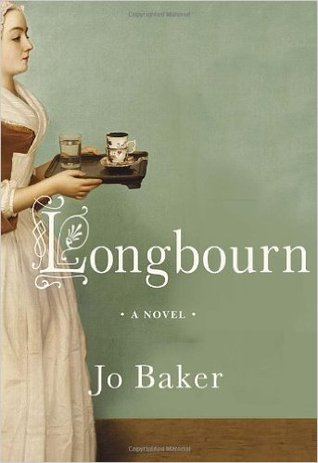
Longbourn

Rating: 3/5 stars
Author: Jo Baker
Genre: Historical Fiction/Retellings
Publisher: Knopf
Release Date: October 8th, 2013

Pages: 352

Synopsis:

If Elizabeth Bennet had the washing of her own petticoats, Sarah often thought, she’d most likely be a sight more careful with them.

In this irresistibly imagined belowstairs answer to Pride and Prejudice, the servants take center stage. Sarah, the orphaned housemaid, spends her days scrubbing the laundry, polishing the floors, and emptying the chamber pots for the Bennet household. But there is just as much romance, heartbreak, and intrigue downstairs at Longbourn as there is upstairs. When a mysterious new footman arrives, the orderly realm of the servants’ hall threatens to be completely, perhaps irrevocably, upended. 

Jo Baker dares to take us beyond the drawing rooms of Jane Austen’s classic—into the often overlooked domain of the stern housekeeper and the starry-eyed kitchen maid, into the gritty daily particulars faced by the lower classes in Regency England during the Napoleonic Wars—and, in doing so, creates a vivid, fascinating, fully realized world that is wholly her own. 

Review:

I liked where this book started, but I didn’t love where it ended.

For the most part, Baker does a very good job using the bones of a beloved classic to create her own well-thought-out novel. In the beginning, I was invested in the servants’ lives — characters we only ever glimpsed in Pride and Prejudice. However, considering how dearly people love Austen’s work, Baker was bold with some of the choices she made. If you’re a die-hard Austen purist, you may struggle with this retelling.

That said, I appreciated how the book forced me to reconsider the world Austen created — one that was charming but one-sided. The descriptions of soldier life during the Napoleonic Wars were brutal, raw, and honest, far removed from the polite dances and witty conversations Austen fans are used to.

Baker also portrays the servants’ lives with an unflinching realism, which in turn makes you question the overall “goodness” of characters like Lizzy and Jane. Some familiar figures are reimagined in ways that feel. And for all the Darcy fans out there—don’t expect too much. He appears only in passing, with perhaps half a dozen lines in the entire book.

In the end, Longbourn is an interesting read if you’re an Austen fan looking for something different, or if you enjoy historical fiction that shines a light on overlooked perspectives. But be warned: it’s not a happy tale. The later sections drag, and some of the narrative turns felt more tedious than revelatory.


Final Thoughts

Longbourn makes you think, but it won’t leave you smiling. I’d recommend it if you want a grittier, more realistic view of Regency life, but not if you’re in search of a cozy Austen-esque escape.

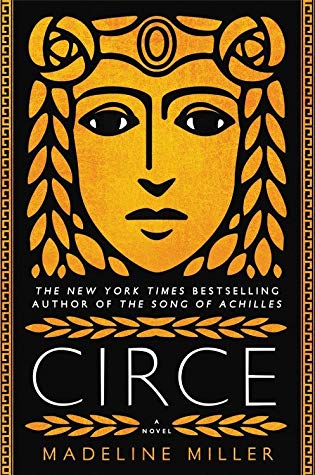
Circe

Rating: 5/5 stars
Author: Madeline Miller
Genre: Fantasy/Mythology
Publisher: Little, Brown and Company
Release Date: April 10th, 2018

Pages: 393

Synopsis:

In the house of Helios, god of the sun and mightiest of the Titans, a daughter is born. But Circe is a strange child—not powerful, like her father, nor viciously alluring like her mother. Turning to the world of mortals for companionship, she discovers that she does possess power—the power of witchcraft, which can transform rivals into monsters and menace the gods themselves.

Threatened, Zeus banishes her to a deserted island, where she hones her occult craft, tames wild beasts and crosses paths with many of the most famous figures in all of mythology, including the Minotaur, Daedalus and his doomed son Icarus, the murderous Medea, and, of course, wily Odysseus.

But there is danger, too, for a woman who stands alone, and Circe unwittingly draws the wrath of both men and gods, ultimately finding herself pitted against one of the most terrifying and vengeful of the Olympians. To protect what she loves most, Circe must summon all her strength and choose, once and for all, whether she belongs with the gods she is born from, or the mortals she has come to love.

Review:

What Madeline Miller achieves in Circe is nothing short of extraordinary. I’ve always loved retellings, but this isn’t just a retelling — it’s a reclamation. Miller takes a character long painted as a footnote or a villain in The Odyssey and gives her depth, voice, and undeniable power.

This is Circe’s story, told from beginning to end. We see her “childhood” in the house of Helios, her banishment, and her centuries of solitude on Aiaia. We watch her shape her own destiny through encounters with mortals and immortals alike — from her part in the birth of the Minotaur, to her friendship with Daedalus, to her fraught relationship with Odysseus.

Miller’s prose is lyrical yet accessible, blending myth and humanity in a way that feels timeless. Her Circe is not flawless — she is lonely, proud, vulnerable, fierce, and achingly human despite her divinity. That complexity is what makes her unforgettable. By the time Odysseus arrives in her story, we no longer see her as a dangerous witch from an old myth, but as a fully realized woman whose choices and pain we understand.

This novel also resonates on a thematic level: it’s about female agency, survival, and the courage to stand alone. Circe’s power comes not just from her witchcraft, but from her resilience and her refusal to let either gods or men define her.


Final Thoughts

Circe is one of those rare books that feels like a gift — a shimmering blend of myth and storytelling that breathes new life into an ancient tale. It’s a treasure on my shelves and one I know I’ll return to again and again.

If you love Greek mythology, feminist retellings, or simply beautifully written fantasy, this book is for you. And if you’ve ever read The Odyssey, prepare to never see Circe the same way again.

I cannot recommend it enough.

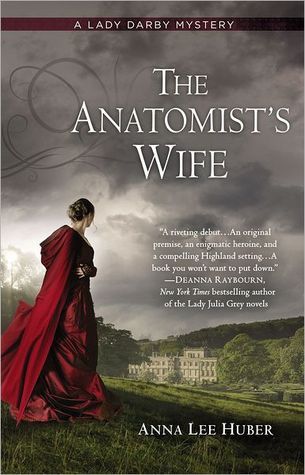
The Lady Darby Mysteries

Rating: 4-5/5 stars
Author: Anna Lee Huber
Genre: Historical Fiction/Mystery
Publisher: Berkely
Release Dates: 2012-2019

Synopsis:

Scotland, 1830. Following the death of her husband, Lady Darby has taken refuge at her sister’s estate, finding solace in her passion for painting. But when her hosts throw a house party for the cream of London society, Kiera is unable to hide from the ire of those who believe her to be as unnatural as her husband, an anatomist who used her artistic talents to suit his own macabre purposes.

Kiera wants to put her past aside, but when one of the house guests is murdered, her brother-in-law asks her to utilize her knowledge of human anatomy to aid the insufferable Sebastian Gage–a fellow guest with some experience as an inquiry agent. While Gage is clearly more competent than she first assumed, Kiera isn’t about to let her guard down as accusations and rumors swirl.

When Kiera and Gage’s search leads them to even more gruesome discoveries, a series of disturbing notes urges Lady Darby to give up the inquiry. But Kiera is determined to both protect her family and prove her innocence, even as she risks becoming the next victim… 

Review:

I love a good mystery, but I’ve never been hooked on an entire mystery series — until now. Anna Lee Huber’s Lady Darby Mysteries pulled me in from the very first book, The Anatomist’s Wife, and have kept me enthralled through every installment since.

What sets this series apart is its perfect balance of historical atmosphere, intelligent plotting, and character depth. Huber’s attention to detail brings 1830s Scotland vividly to life — from its windswept landscapes to its social customs. The research shines through without ever weighing the story down, making the setting feel immersive and authentic.

Kiera Darby herself is a remarkable heroine. Burdened by a painful past and the weight of scandal, she is intelligent, fiercely independent, and refreshingly complex. Her partnership with Sebastian Gage is one of the highlights of the series — the tension between them, both professional and romantic, gives the mysteries an added emotional pull. The slow-burn romance is especially well done, never overshadowing the central mysteries but adding depth to both characters.

The mysteries themselves are well-constructed and never formulaic. Each book offers fresh intrigue, with twists that feel both surprising and earned. Huber doesn’t shy away from gruesome or unsettling details, but they never feel gratuitous; instead, they serve to underscore the brutal realities of the time and the dangers faced by her characters.

That said, a small caveat: the titles of the books can sometimes feel a little melodramatic, but don’t let that fool you. The writing inside is far from cheesy — it’s thoughtful, layered, and gripping.


Series Order

  1. The Anatomist’s Wife (357 pages)
  2. Mortal Arts (384 pages)
  3. A Grave Matter (421 pages)
  4. A Study in Death (323 pages)
    4.5. A Pressing Engagement (83 pages)
  5. As Death Draws Near (342 pages)
  6. A Brush with Shadows (383 pages)
  7. An Artless Demise (372 pages)

Final Thoughts

If you’re a fan of historical mysteries that combine rich atmosphere, smart plots, and compelling characters, the Lady Darby series is absolutely worth picking up. It’s a perfect fit for readers who enjoy Deanna Raybourn’s Veronica Speedwell mysteries or C.S. Harris’s Sebastian St. Cyr series.

I recommend starting at the beginning with The Anatomist’s Wife, not only because the mystery is strong but also because it lays the foundation for Kiera and Gage’s dynamic — one of the series’ greatest strengths.

For me, these books were a delightful surprise: atmospheric, engrossing, and emotionally satisfying. Once I started, I couldn’t stop.

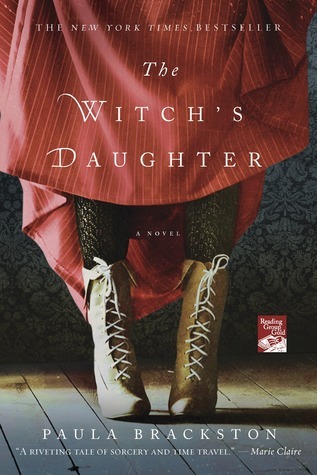
The Witch’s Daughter

Rating 3.5/5 stars
Author: Paula Brackston

Genre: Fantasy/ Historical Fiction
Publisher: St. Martin’s Griffin
Release Date: January 31, 2012

Pages: 387

Synopsis:

My name is Elizabeth Anne Hawksmith, and my age is three hundred and eighty-four years. If you will listen, I will tell you a tale of witches. A tale of magic and love and loss. A story of how simple ignorance breeds fear, and how deadly that fear can be. Let me tell you what it means to be a witch. 

In the spring of 1628, the Witchfinder of Wessex finds himself a true Witch. As Bess Hawksmith watches her mother swing from the Hanging Tree she knows that only one man can save her from the same fate: the Warlock Gideon Masters. Secluded at his cottage, Gideon instructs Bess, awakening formidable powers she didn’t know she had. She couldn’t have foreseen that even now, centuries later, he would be hunting her across time, determined to claim payment for saving her life.

In present-day England, Elizabeth has built a quiet life. She has spent the centuries in solitude, moving from place to place, surviving plagues, wars, and the heartbreak that comes with immortality. Her loneliness comes to an abrupt end when she is befriended by a teenage girl called Tegan. Against her better judgment, Elizabeth opens her heart to Tegan and begins teaching her the ways of the Hedge Witch. But will she be able to stand against Gideon—who will stop at nothing to reclaim her soul—in order to protect the girl who has become the daughter she never had?

Review:

Paula Brackston’s The Witch’s Daughter is an atmospheric blend of fantasy and historical fiction, weaving witchcraft, folklore, and centuries of survival into a story that feels both timeless and tragic.

The strongest part of the novel is its historical settings. Brackston brings Elizabeth’s past vividly to life — from plague-ridden villages to shadowy witch trials — with enough sensory detail to make each era feel tangible. These sections are rich, immersive, and full of emotional weight. They reveal not only Elizabeth’s resilience but also the fear and superstition that made survival nearly impossible for women accused of witchcraft.

By contrast, the present-day storyline feels less compelling. While Elizabeth’s relationship with Tegan has promise and offers a tender glimpse into her longing for connection, the modern chapters sometimes lack the depth and richness of the historical ones. Toward the end, the pacing begins to rush, as if the novel is sprinting toward resolution rather than letting the conclusion unfold naturally. This unevenness makes the finale feel less satisfying compared to the careful buildup earlier in the book.

Brackston’s prose is lyrical and detailed, perfectly suited to gothic historical fiction. She captures both beauty and brutality, lingering on the textures of Elizabeth’s world in a way that makes even mundane details shimmer with atmosphere. Yet at times, the story sacrifices narrative cohesion for mood, leaving some plot threads feeling unresolved or too quickly tied up.


Final Thoughts

The Witch’s Daughter is a book best suited for readers who love historical fantasy with a gothic edge — those who don’t mind slow immersion, lush descriptions, and morally ambiguous characters. If you’re drawn to tales of witches, curses, and survival across centuries, this novel will likely sweep you up, especially in its historical passages.

For me, the imbalance between the past and present storylines kept this from being a full four-star read, but it was still an engaging, atmospheric experience. Brackston’s gift for historical detail is undeniable, and I would happily pick up more of her work when I’m in the mood for something darkly magical.

Design a site like this with WordPress.com
Get started