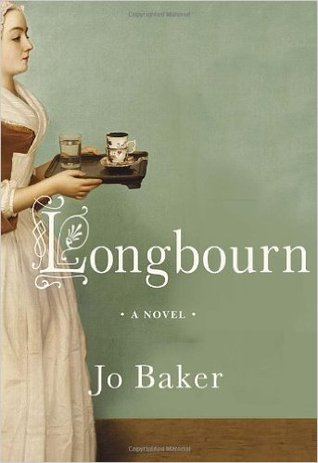
Rating: 3/5 stars
Author: Jo Baker
Genre: Historical Fiction/Retellings
Publisher: Knopf
Release Date: October 8th, 2013
Pages: 352
Synopsis:
If Elizabeth Bennet had the washing of her own petticoats, Sarah often thought, she’d most likely be a sight more careful with them.
In this irresistibly imagined belowstairs answer to Pride and Prejudice, the servants take center stage. Sarah, the orphaned housemaid, spends her days scrubbing the laundry, polishing the floors, and emptying the chamber pots for the Bennet household. But there is just as much romance, heartbreak, and intrigue downstairs at Longbourn as there is upstairs. When a mysterious new footman arrives, the orderly realm of the servants’ hall threatens to be completely, perhaps irrevocably, upended.
Jo Baker dares to take us beyond the drawing rooms of Jane Austen’s classic—into the often overlooked domain of the stern housekeeper and the starry-eyed kitchen maid, into the gritty daily particulars faced by the lower classes in Regency England during the Napoleonic Wars—and, in doing so, creates a vivid, fascinating, fully realized world that is wholly her own.
Review:
I liked where this book started, but I didn’t love where it ended.
For the most part, Baker does a very good job using the bones of a beloved classic to create her own well-thought-out novel. In the beginning, I was invested in the servants’ lives — characters we only ever glimpsed in Pride and Prejudice. However, considering how dearly people love Austen’s work, Baker was bold with some of the choices she made. If you’re a die-hard Austen purist, you may struggle with this retelling.
That said, I appreciated how the book forced me to reconsider the world Austen created — one that was charming but one-sided. The descriptions of soldier life during the Napoleonic Wars were brutal, raw, and honest, far removed from the polite dances and witty conversations Austen fans are used to.
Baker also portrays the servants’ lives with an unflinching realism, which in turn makes you question the overall “goodness” of characters like Lizzy and Jane. Some familiar figures are reimagined in ways that feel. And for all the Darcy fans out there—don’t expect too much. He appears only in passing, with perhaps half a dozen lines in the entire book.
In the end, Longbourn is an interesting read if you’re an Austen fan looking for something different, or if you enjoy historical fiction that shines a light on overlooked perspectives. But be warned: it’s not a happy tale. The later sections drag, and some of the narrative turns felt more tedious than revelatory.
Final Thoughts
Longbourn makes you think, but it won’t leave you smiling. I’d recommend it if you want a grittier, more realistic view of Regency life, but not if you’re in search of a cozy Austen-esque escape.
 The Book Nook