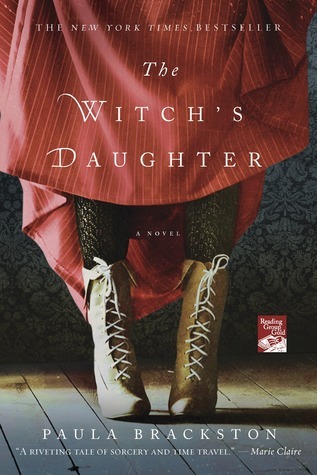
Rating 3.5/5 stars
Author: Paula Brackston
Genre: Fantasy/ Historical Fiction
Publisher: St. Martin’s Griffin
Release Date: January 31, 2012
Pages: 387
Synopsis:
My name is Elizabeth Anne Hawksmith, and my age is three hundred and eighty-four years. If you will listen, I will tell you a tale of witches. A tale of magic and love and loss. A story of how simple ignorance breeds fear, and how deadly that fear can be. Let me tell you what it means to be a witch.
In the spring of 1628, the Witchfinder of Wessex finds himself a true Witch. As Bess Hawksmith watches her mother swing from the Hanging Tree she knows that only one man can save her from the same fate: the Warlock Gideon Masters. Secluded at his cottage, Gideon instructs Bess, awakening formidable powers she didn’t know she had. She couldn’t have foreseen that even now, centuries later, he would be hunting her across time, determined to claim payment for saving her life.
In present-day England, Elizabeth has built a quiet life. She has spent the centuries in solitude, moving from place to place, surviving plagues, wars, and the heartbreak that comes with immortality. Her loneliness comes to an abrupt end when she is befriended by a teenage girl called Tegan. Against her better judgment, Elizabeth opens her heart to Tegan and begins teaching her the ways of the Hedge Witch. But will she be able to stand against Gideon—who will stop at nothing to reclaim her soul—in order to protect the girl who has become the daughter she never had?
Review:
Paula Brackston’s The Witch’s Daughter is an atmospheric blend of fantasy and historical fiction, weaving witchcraft, folklore, and centuries of survival into a story that feels both timeless and tragic.
The strongest part of the novel is its historical settings. Brackston brings Elizabeth’s past vividly to life — from plague-ridden villages to shadowy witch trials — with enough sensory detail to make each era feel tangible. These sections are rich, immersive, and full of emotional weight. They reveal not only Elizabeth’s resilience but also the fear and superstition that made survival nearly impossible for women accused of witchcraft.
By contrast, the present-day storyline feels less compelling. While Elizabeth’s relationship with Tegan has promise and offers a tender glimpse into her longing for connection, the modern chapters sometimes lack the depth and richness of the historical ones. Toward the end, the pacing begins to rush, as if the novel is sprinting toward resolution rather than letting the conclusion unfold naturally. This unevenness makes the finale feel less satisfying compared to the careful buildup earlier in the book.
Brackston’s prose is lyrical and detailed, perfectly suited to gothic historical fiction. She captures both beauty and brutality, lingering on the textures of Elizabeth’s world in a way that makes even mundane details shimmer with atmosphere. Yet at times, the story sacrifices narrative cohesion for mood, leaving some plot threads feeling unresolved or too quickly tied up.
Final Thoughts
The Witch’s Daughter is a book best suited for readers who love historical fantasy with a gothic edge — those who don’t mind slow immersion, lush descriptions, and morally ambiguous characters. If you’re drawn to tales of witches, curses, and survival across centuries, this novel will likely sweep you up, especially in its historical passages.
For me, the imbalance between the past and present storylines kept this from being a full four-star read, but it was still an engaging, atmospheric experience. Brackston’s gift for historical detail is undeniable, and I would happily pick up more of her work when I’m in the mood for something darkly magical.
 The Book Nook